John Prescott May 1938 – November 2024
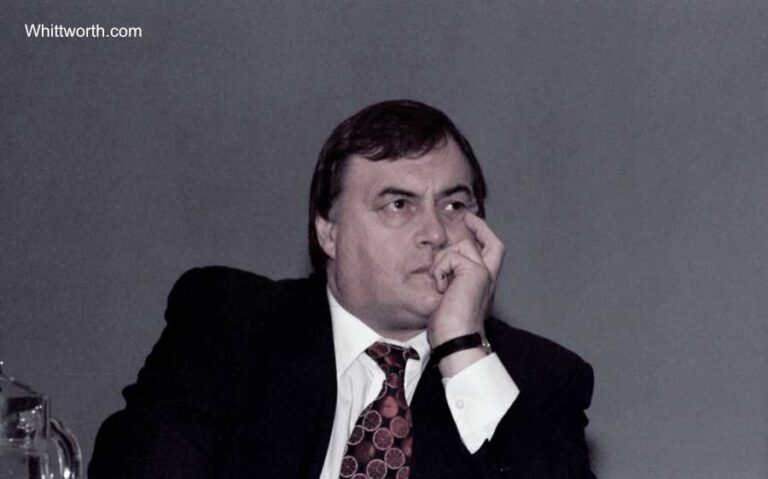
The career path of John Prescott, from steward on ocean-going liners to Britain’s longest serving deputy prime minister – for 10 years from 1997 – was a triumph of determination and doggedness. Prescott, who has died aged 86, was the son of working-class parents, left school at 15 and ended up with a life peerage. During 40 years as an MP for Kingston upon Hull East he saw himself as an embodiment of blunt and enduring Labour values. The leaders he loyally served – Tony Blair and Gordon Brown – capitalised on his roots by contrast to their middle-class backgrounds. Prescott could persuade the party to vote for measures to abolish ancient shibboleths, such as clause IV, Labour’s rule on public ownership of key industries, because of his background. His chief service in government may well have come as a conciliator between Blair and Brown, rather than his work as a departmental minister, even though he had some achievements in the latter, not least negotiating the Kyoto climate change agreement.
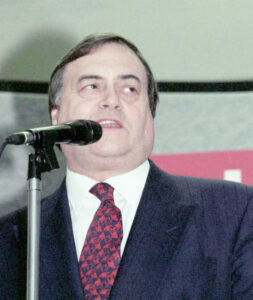
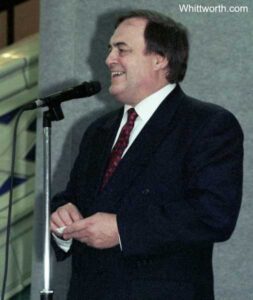
But Prescott’s achievements were often undermined by a grumpiness that did not always win admirers. “Why is it I’m the longest ever serving deputy prime minister, been here 40 years, and I don’t rate a photograph or picture in the House of Commons galleries of everybody? I don’t know. I don’t bother pondering about it. I just note that it happens,” he told a Guardian interviewer in 2008. We complained that his face did not naturally fall into a smile and, while privately warm even towards political opponents, his relationship with the media was combative to say the least.
Read The Guardian’s Full Obituary Here
Benjamin Zephaniah April 1958 – December 2023
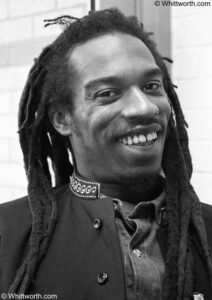
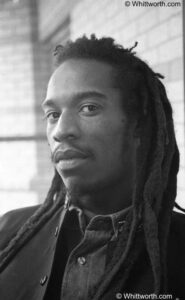
Despite the occasionally visceral and often rebellious nature of his poetry, Benjamin Zephaniah, who has died aged 65 of a brain tumour, had such broad appeal in the UK that he became something close to a national treasure, attracting devotion among all classes and types of people, young as well as old.
With a down-to-earth mission to take poetry wherever he could – and especially to those who would not usually read it – his reach also extended to other parts of the world, where he was respected as a writer and performer who could be relied upon to speak his mind with forthrightness, honesty and self-effacing humour.
From an unpromising start to life in Birmingham, Zephaniah hauled himself into the public eye during the early 1980s by hitching himself to a post-punk caravan of streetwise performance poets such as John Cooper Clarke, Attila the Stockbroker and, at a slightly greater remove, Linton Kwesi Johnson – all of whom eschewed the abstract in favour of writing with a fierce political edge about everyday life.
Focusing initially on the debilitating effects of racism, including through his breakthrough poem Dis Policeman Keeps on Kicking Me to Death, Zephaniah later branched out to consider other topics that were close to his heart, including unemployment, homelessness and, as a vegan from the age of 13, animal rights.
Courtesy of The Guardian – Read More.
Tina Turner November 1939 - May 2023
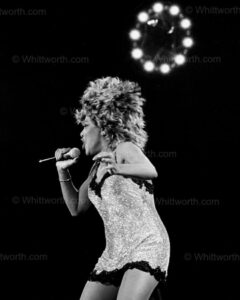
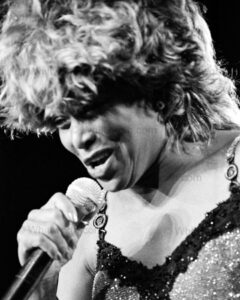
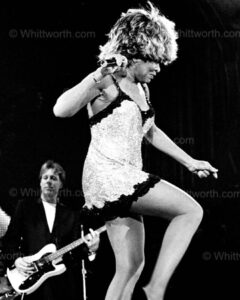
When Tina Turner, walked out on her abusive husband Ike in Dallas, Texas, she feared it would spell the end of her showbusiness career. It was 1976, and she had been performing with Ike for two decades, since she had first jumped onstage and sang with his band at the Manhattan club in East St Louis, Missouri. Yet, although she was desperate and had only 36 cents in her pocket, she was on her way to a renaissance as one of the most successful performers in popular music during the 1980s and 90s. She had to endure several lean years, but a turning point came in 1983, when David Bowie told Capitol Records that she was his favourite singer.
A version of Al Green’s Let’s Stay Together followed. Produced by the electropoppers Martyn Ware and Ian Craig Marsh from Heaven 17, the track went to No 6 in the UK, then cracked the US Top 30 the following year. Turner cemented the upturn in her fortunes with the album Private Dancer (1984). Driven by the huge hit What’s Love Got to Do With It? (her first American No 1), the album became a phenomenon, lodging itself in the American Top 10 for nine months and going on to sell more than 10m copies.
Suddenly Turner was one of the biggest acts in an era of stadium superstars such as Michael Jackson, Dire Straits and Phil Collins.

Bernard Atha 27 August 1928 – 22 October 2022

Tributes have been paid to former Kirkstall councillor and Lord Mayor Bernard Atha who passed away on the 22nd October 2022 aged 94 after a short illness.
He was born in Leeds in 1928 and spent almost six decades serving the city as a councillor.
Mr Atha was also an actor who performed in the film Kes and TV series including Coronation Street, Emmerdale and All Creatures Great and Small. In 1957 he was first elected to Leeds City Council as a Labour councillor on the City ward until it was abolished.
He went on to represent Holbeck from 1969-73 and Kirkstall from 1973 until his retirement in 2014. Mr Atha was a major figure in the arts and sport andw as influential in the building of West Yorkshire Playhouse in 1974 and previously sat on the board for the Leeds Grand Theatre.
He was Lord Mayor of Leeds from 2000 to 2001. During his mayoralty he selected 18 “high-profile, well-known Yorkshire women” to act in turn as his Lady Mayoress, a role traditionally taken by the spouse or another
family member of the mayor.
He was appointed CBE in the 2007 Birthday Honours “for services to the Arts and to the community in Leeds”, having earlier been appointed OBE in the 1991 New Year Honours “for services to Sport, particularly Sport for
the Disabled”.
Leeds City Council leader James Lewis Tweeted his sadness at Mr Atha’s passing. He said: “Really sad news. For those of us who worked with Bernard we will remember him as force of nature and he has left a legacy for
Leeds especially in culture and services for disabled people. People still talk about his memorable year as Lord Mayor many years on.” West Leeds Dispatch.
Kay Mellor 11th May 1951 - 15th May 2022

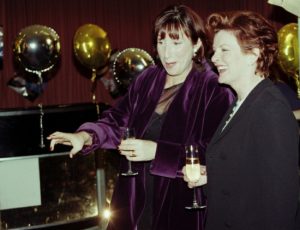
Kay Mellor was brought up by a single-parent mum on a council estate in Leeds and left school with no qualifications and seemingly little in the way of prospects. She had two children by the time she was 20, but when they reached school age she resumed her own education, earning O-Levels, A-Levels and a degree in drama before writing some of the most distinctive television series of the 1990s and 2000s. Her drama was rooted firmly in the urban Yorkshire environment she knew so well, drama with more than a dash of humour. She pushed the boundaries with her protagonists – prostitutes in Band of Gold, her breakthrough series in 1995; women footballers in Playing the Field, back in the late 1990s and early 2000s when women’s football was still very much a niche subject; and weight-watchers in Fat Friends, which helped launch James Corden towards superstardom. Mellor started off as a jobbing actress in the 1980s. She was hired for the soap opera Albion Market to play a policewoman, wrote a script on spec and wound up as one of the writers. That led in turn to a regular gig as one of the writers on Coronation Street. Courtesy of ‘The Scotsman’. Read the full obituary here.
Gary Waldhorn 3rd July 1943 - 10th January 2022
Gary Waldhorn, who died aged 78, played some political high flyers on television in his time – Caulaincourt, the diplomat and Second Empire loyalist, in Napoleon and Love (1974), and the raffish society diarist Chips Channon in Edward and Mrs Simpson (1978) – but his true talent lay in a curious ability to be pompous, boring and funny all at the same time. Waldhorn, of a bald and complacent demeanour, was the very embodiment of reactionary disapproval, but there was a twinkle about his bluster that, while no match for French’s joyful steam-rollering of the village idiots and worthies, made him an always watchable last line of resistance. This simple situation was wrung through two decades – there have been subsequent Christmas and charity specials, and “lockdown” episodes during the pandemic – without once going stale or losing its comic brio. You can read his full obituary here.

Una Stubbs 1 May 1937 - 12 August 2021

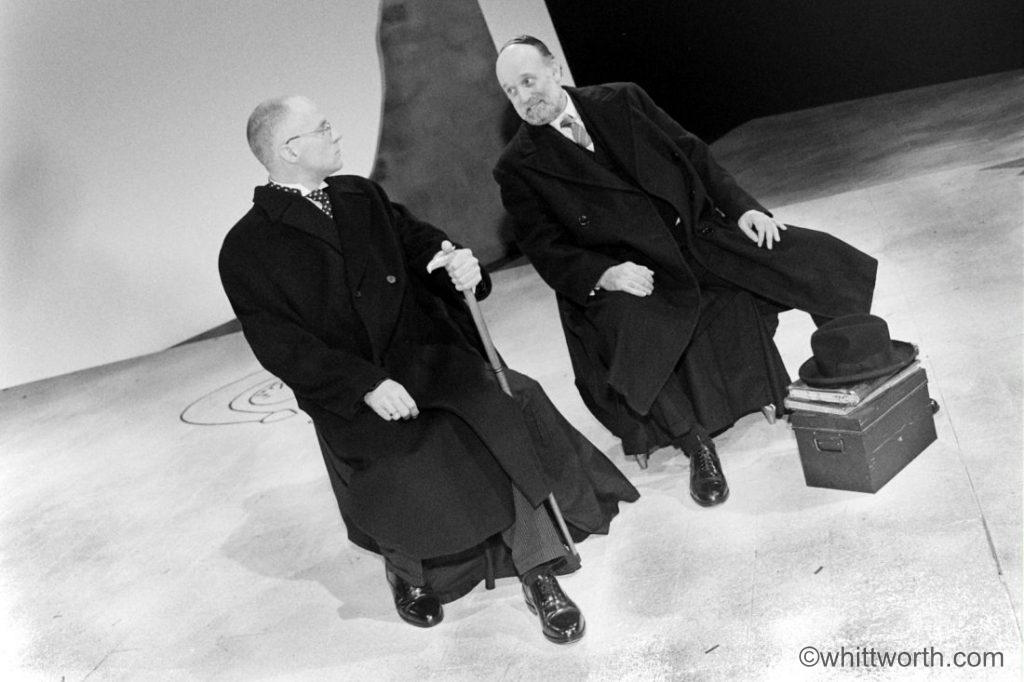
Bright and bubbly, tart and twinkly, Una Stubbs, who died aged 84, was a revue regular and a Palladium pantomime principal boy who parlayed her natural song-and-dance talent into a later, diverse career on the classical stage.
In earlier years she was best known for her roles alongside Cliff Richard in two high-spirited pop musical movies – Summer Holiday (1963) and Wonderful Life (1964) – and as Alf Garnett’s daughter, Rita Rawlins, married to a socialist layabout (Anthony Booth, Cherie Blair’s father and so Tony’s father-in-law), in Johnny Speight’s classic TV series Till Death Us Do Part (1965‑75) and in episodes of its 1980s sequel, In Sickness and in Health.
Both of these incarnations are unimaginable today: a docile, amenable dolly bird hanging around Cliff and the Shadows, and a tolerant but incipiently trendy daughter of a loud-mouthed racist bigot – in Warren Mitchell’s brilliant and relentless performance – in the postwar Wapping sitcom that became a whopping hit.
Stubbs transcended, or at least sidestepped, these cultural contrasts by the simple expedient of always being herself, honest and translucent in all she did.
Read her full obituary here, courtesy of The Guardian
Keith Flint. September 1969 - March 2019

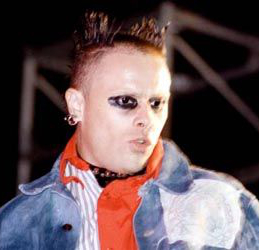
Born Keith Charles Flint on 17 September 1969, the singer had an unhappy childhood in Braintree, Essex, feuding with his parents, who split when he was young.
A bright boy with dyslexia, he was disruptive in class, and was thrown out of school at the age of 15.
Finding work as a roofer, he immersed himself in the acid house scene of the late 80s – meeting Howlett at an open-air rave in 1989. Impressed by Howlett’s DJ skills, he approached him and asked for a personalised mixtape. Howlett obliged, scoring the word “Prodigy” on the cover in reference to his favourite synthesiser and putting a selection of his original songs on the B-side.
Flint was so impressed that he encouraged Howlett to pursue music professionally, offering up his services as a dancer. “I loved his music and, ‘Boom!’ I was in,” he told FHM magazine. “I was never the brains behind the band – that was always Liam. But together we were a complete package. It was the outlet I was looking for.”
Completed by Leeroy Thornhill, The Prodigy scored early hits with Everybody In The Place, Out Of Space and Charly – which sampled the dialogue from an old children’s safety film: “Always tell your mummy before you go off somewhere.”
Their music matured on their second album, Music For The Jilted Generation, which introduced new band member MC Maxim and saw Howlett incorporate breakbeats, guitar loops and hip-hop samples on tracks such as No Good (Start The Dance) and Voodoo People. The album was nominated for a Mercury Music Prize – but the band truly went global when Flint grabbed the mic and unleashed the full fury of his voice on the abrasive, in-your-face rave-rock anthem Firestarter. The lyrics – “I’m the firestarter / Twisted firestarter” – were the first he’d written for the band. “It didn’t really have anything to do with starting fires,” he told the BBC in 1996. “It was when you’re in front of 5,000 people and you can go out there – and just with the aid of the music and a visual performance, you can stir all them people up into a frenzy and that’s almost like starting a massive fire, or a riot.” Courtesy of The BBC
Pete Postlethwaite 16th February 1946 - 2nd January 2011
I met Pete at the 1997 Leeds International Film Festival whilst I was the festival’s photographer. After the curtain had come down at Hyde Park cinema on the 3 PP films, everyone returned to the hotel on Wellington St for a buffet. I was introduced to him in what were fairly ungentlemanly circumstances; he had a pint in one hand and a pie in the other. I held out my hand to shake, and he held the pie between his teeth as he shook my hand and nodded a ‘Hello’. Very down to earth and extremely friendly.
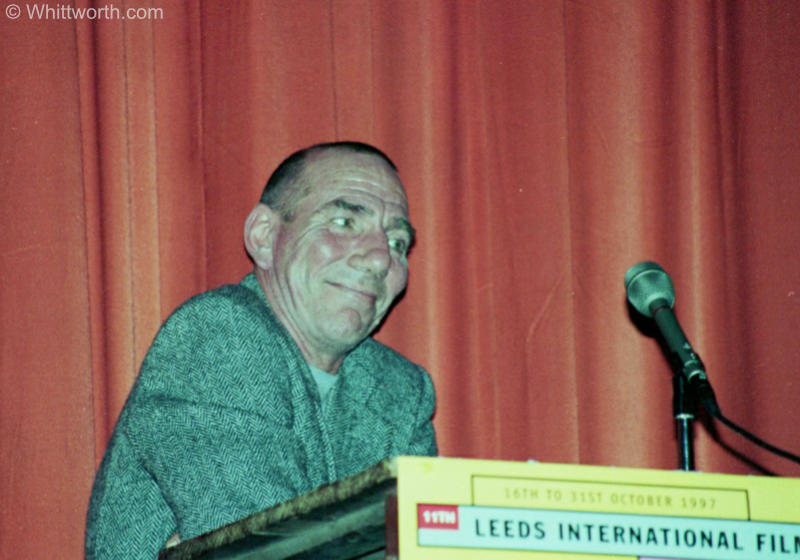
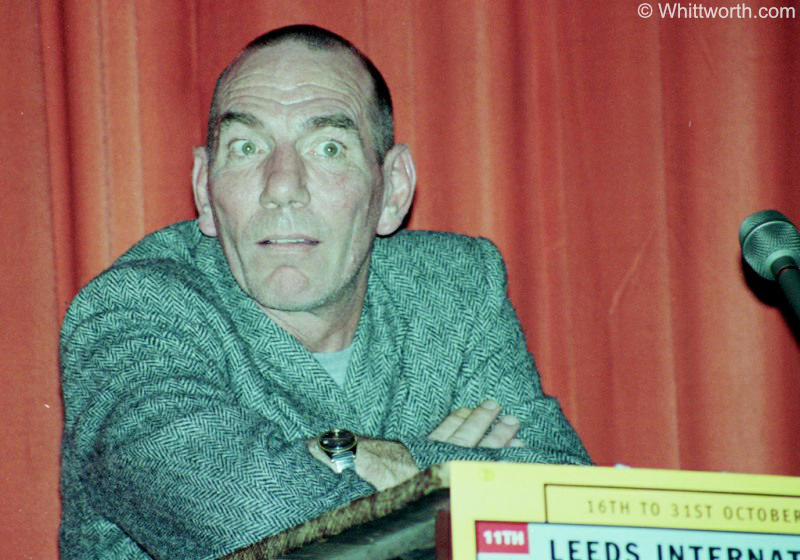
This is what The Guardian had to say:
The actor Pete Postlethwaite had a face that elicited many similes, among them “a stone archway” and “a bag of spanners”. These unflattering descriptions, plus his tongue-twisting surname, would suggest an actor with a career limited to minor supporting roles. But Postlethwaite, who has died of cancer aged 64, played a vast range of characters, often leading roles, on stage, television and film. He was at ease in switching the masks of tragedy and comedy.
The working-class martinet father he played in Terence Davies’s film Distant Voices, Still Lives (1988), which Postlethwaite credited as his big break, can be seen as paradigmatic of his career. Postlethwaite powerfully conveyed the father’s double-sided nature: at one moment he is tenderly kissing his children goodnight, the next he is ripping the tablecloth off in a rage. He took a job in a sheet-metal factory to pay his way through Bristol Old Vic theatre school, before starting his career at the Liverpool Everyman theatre. From 1975, Postlethwaite began to get roles in films and on television, but it took more than 10 years for audiences to begin to put a name to that face. He had a recurring role in the TV series Horse in the House (1979), played the butcher in the British comedy film A Private Function (1984) and appeared in the play within the play in Franco Zeffirelli’s film of Hamlet (1990). By then, he was in demand on both sides of the Atlantic, though he mostly refrained from Americanising his accent.
He was among the British contingent in Alien 3 (1992) and was a British captain in The Last of the Mohicans (1992), also starring Day-Lewis. He lent a slight, unplaceable foreign accent to his soft-spoken sinister enforcer, Kobayashi, in Bryan Singer’s inscrutable The Usual Suspects (1995).
Read his full obituary here. Courtesy of the Guardian.
Linda Helen Smith 29th January 1958 - 27th February 2006
The comedian Linda Smith, died aged just 48. Friends and colleagues paid tribute to the woman whose distinctive south London twang was heard on everything from the New Quiz, to Just a Minute, to I’m Sorry I Haven’t a Clue. She also appeared frequently on TV including Have I Got News for You, QI, Call My Bluff and Countdown.
Radio 4’s controller, Mark Damazer, called her “a Radio 4 giant”. He said: “She was incredibly funny. She generated an energy and warmth in every programme she ever did that made her fellow comedians and millions of listeners love her. It’s a terrible loss.”
Andy Hamilton, a fellow panelist on the News Quiz, said: “She was probably the funniest person I’ve ever worked with both off and on stage. She had the most original comic mind and she was fantastic company. She was like Roger Federer, she could play any game. On the News Quiz she was the quickest of all of us.”

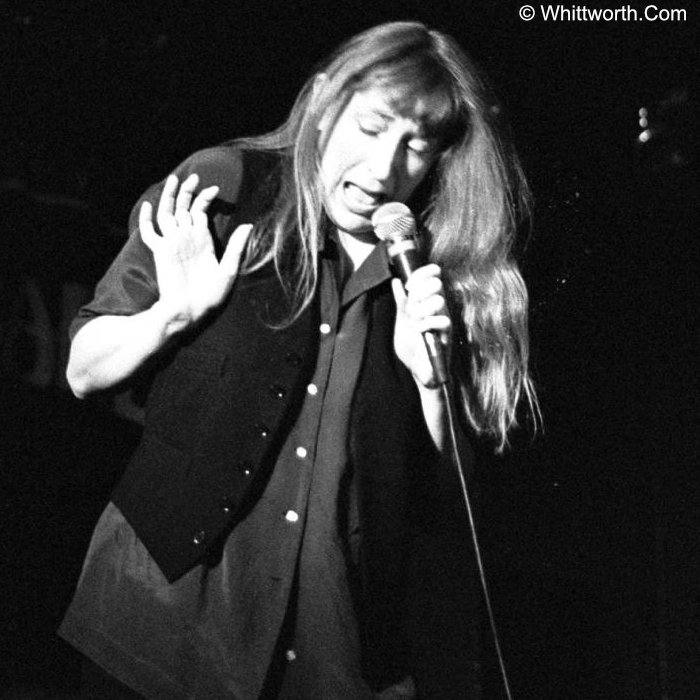
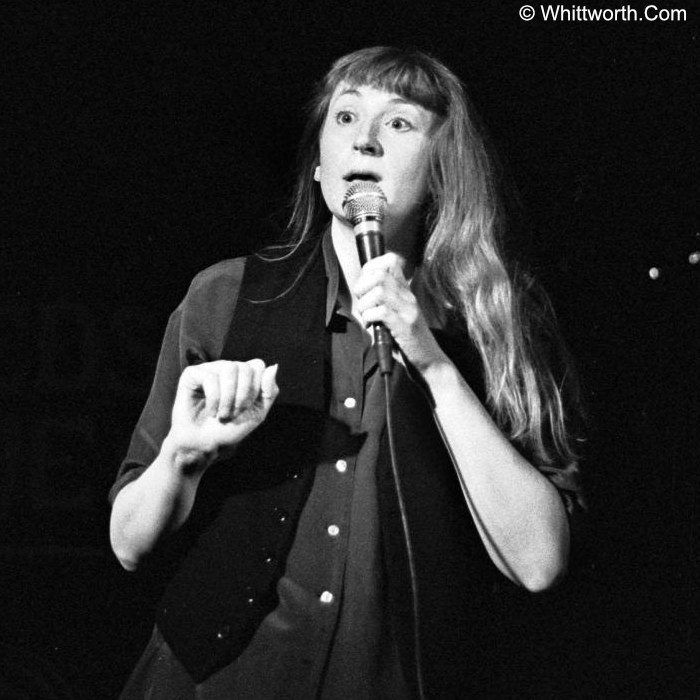
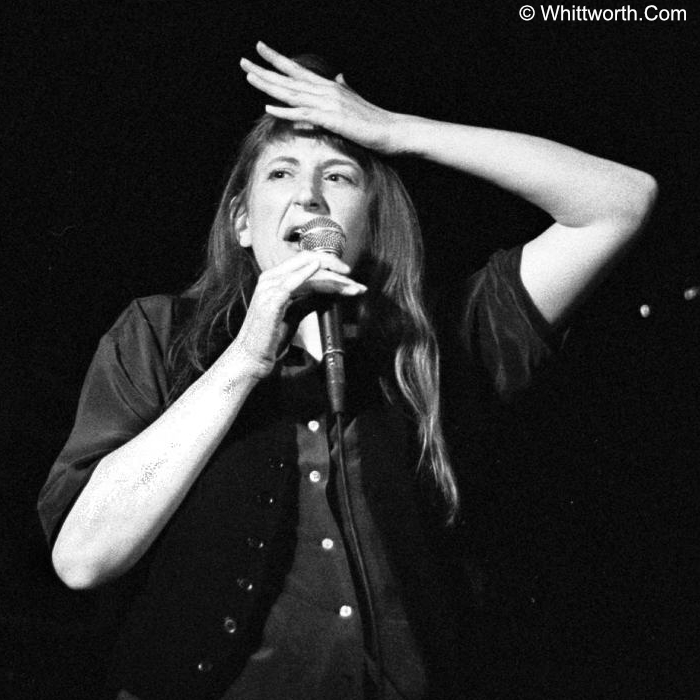
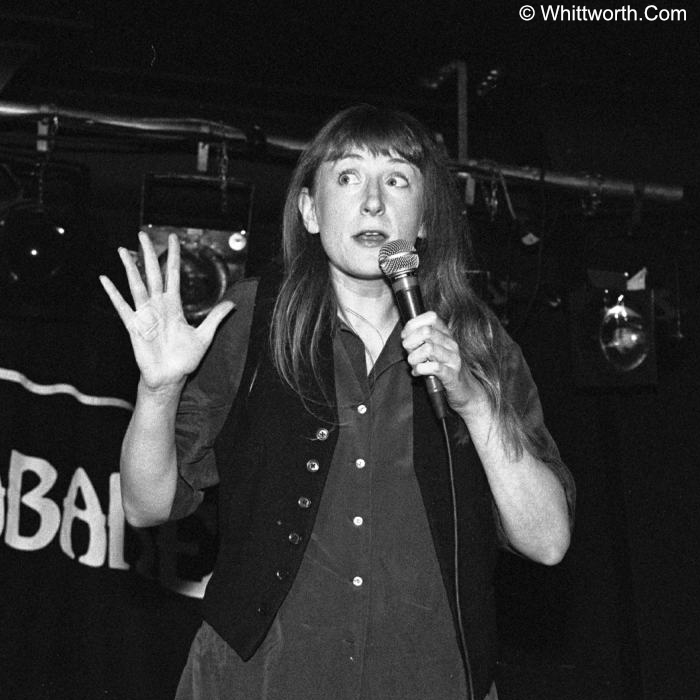
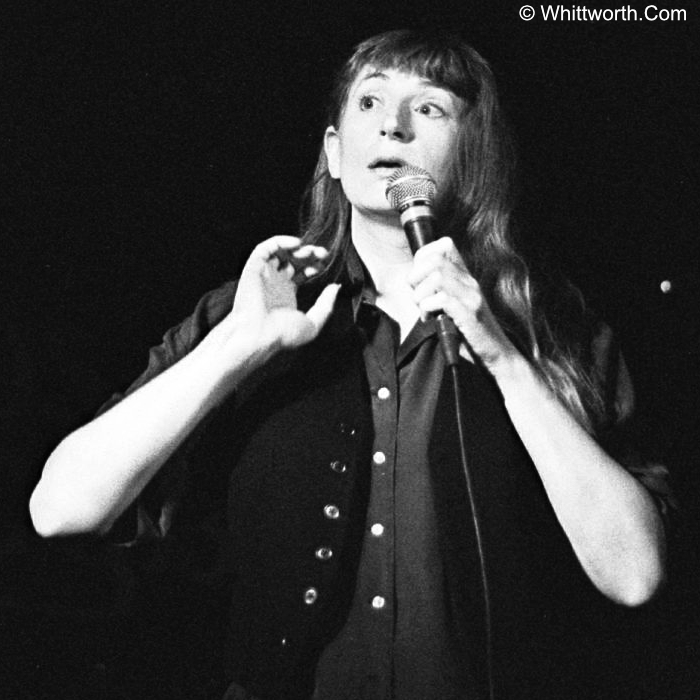
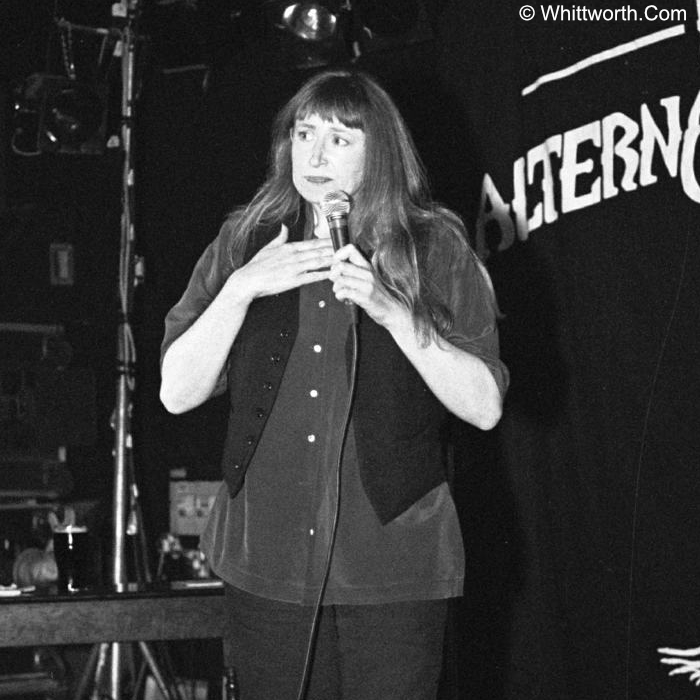
In 2002 Radio 4 listeners voted her wittiest person alive, ahead of Stephen Fry. Of the sad news Fry said: “She was one of the smartest, funniest and most sweet natured people I ever encountered in the comedy world. Her voice lit up Radio 4’s News Quiz, she was brilliant on QI and she tirelessly travelled the UK as one of the most respected and loved comics on the circuit. Sad and miserable news. “Smith was diagnosed with ovarian cancer in 2002 but chose not to make it public. Her close friend the comedian Jeremy Hardy said she was annoyed by it. “She didn’t want to dignify it with publicity. She was just fantastic. She had a brilliant mind and an incredible memory – she could remember chunks of Shakespeare, chunks of Scorcese, bits of the Bible. She loved beautiful things.” Smith also appeared on I’m Sorry I Haven’t a Clue. Fellow panelist Barry Cryer said the news was a shock but not a surprise given her illness. “She was gorgeous and very, very funny – not just joke funny. She was a genuine eccentric.”
Smith’s roots were in standup and she became a circuit regular after winning the Hackney Empire new act of the year in 1987. She had strong views on religion and the British Humanist Association asked her to become its president in 2004. Hanne Stinson, executive director of the BHA, said: “I was struck by how everything she said about her beliefs was completely in tune with the BHA.”
Richard Whiteley 28th December 1943 – 26th June 2005

Richard Whiteley, who died on Sunday 26th June 2005, was best known as the host of Countdown, the popular teatime television quiz devoted to anagrams and arithmetic.
The programme was the first to appear when Channel 4 began broadcasting on November 2 1982, and the bespectacled Whiteley greeted viewers with the words: “As the countdown to the launch of a new channel ends, a new Countdown begins.”
Thereafter, his mildly eccentric brand of humour and thoroughly individual dress sense became inextricably linked with the show, and he eventually proved as popular as its characteristic numbers and letters games.
The loud, stripey suits and large colourful ties (he was said to have more than 500) which were his trademarks had been known to viewers of Yorkshire Television’s news output for several years. But when his bumbling charm and inability to refrain from feeble wordplay were unleashed on national television he developed a substantial, if ironic, personal following, particularly among students and pensioners.
Obituary: Courtesy of The Telegraph, read the full article here.
Rod Hull 13th August 1935 - 17th March 1999
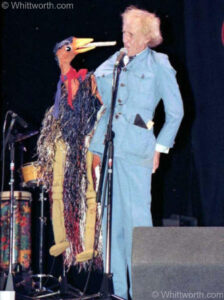
Television is a great consumer of talent. It uses people up and then spits them out into the oblivion of panto and seaside piers. Rod Hull, the children’s entertainer known to millions throughout the Seventies and Eighties for his manic act with the anarchic puppet Emu, a bad-tempered and aggressive blue and yellow bird, provides a cautionary tale. He rose to the top of his profession but fell from grace because of over-exposure, mismanagement and his own naive nature.
Hull was born in 1935 on the Isle of Sheppey in Kent. His father Leonard was a jack-of-all-trades with an optimistic outlook on life and a succession of odd jobs. “Life at home was like a panto,” Hull later recalled:
We were quite poor. My father never succeeded in anything, but that never worried him. Or me. Or my mother Hilda who was as he was and terribly proud of him. It was just Dad. Life to him was a giggle. He always gave me bags of love. And he taught me that as long as you’ve got a sparkle in your eye, life will be good. Read his full obituary here.